

Cities need to be places where children can play
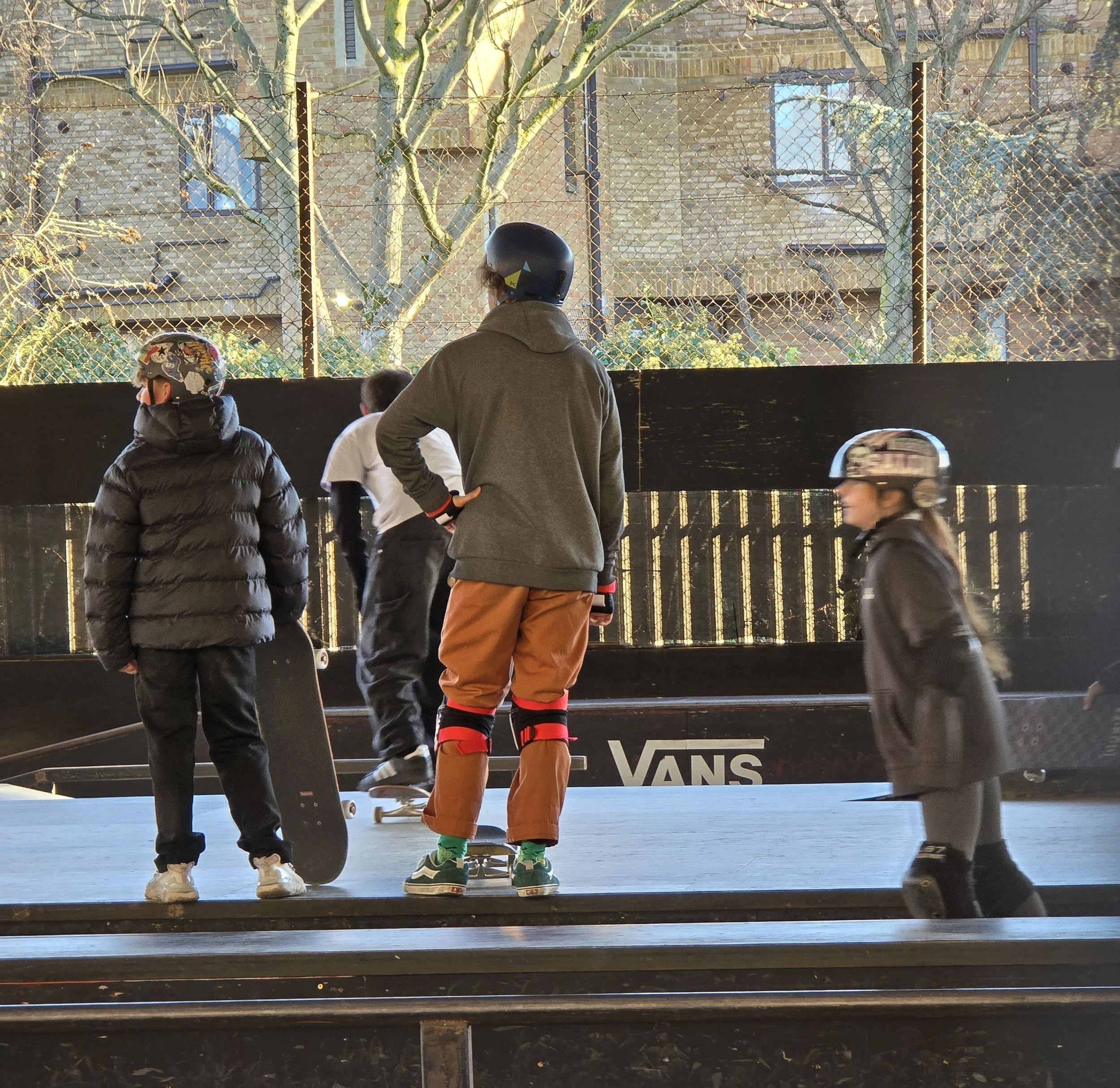
Skatepark @ Westbourne Park, London
In the 21st-century city, the value of play often gets sidelined in the rush to prioritise efficiency, productivity, transport corridors, and densification. But if we take a moment to see the city through a child’s eyes, we notice something striking: the urban fabric isn’t only about movement and commerce — it’s also a stage for life’s most formative interactions. Children need space to play not as an afterthought, but as a central strand in the design and experience of our cities.
Play is fundamental to how children learn about risk, space, community, and imagination. As playground designer Jerry Cooper of Theories Landscape once suggested, there’s a danger of losing sight of the child in design thinking unless we centre their needs in the planning process — not just in isolated playgrounds but across the entire urban realm. (Rethinking Childhood)
Take One Green Mile in Mumbai by MVRDV and StudioPOD: a once-neglected stretch beneath a busy flyover transformed into a vibrant, shaded public space with greenery, seating, play areas, and active zones that invite movement, sociability, and delight for all ages. (mvrdv.com) Far from being a marginal park, this intervention proves that even infrastructural thresholds can become places where children and families feel welcome, safe, and part of the city’s social life.
Similarly, Konditaget Lüders in Copenhagen reimagines an urban rooftop — atop a multi-storey car park — as an activity landscape. Designed by JAJA Architects, this elevated public playground and fitness space weaves swings, climbing nets, trampolines and running tracks into a cityscape normally dominated by cars and concrete. (JAJA Architects) Here, the city becomes a playground without sacrificing functionality, expanding our idea of where children can play and how public space contributes to health and community well-being.
Closer to grassroots community engagement, Beirut’s Public Stairs by Catalytic Action demonstrate that play need not be confined to designated parks. In neighbourhoods like Mar Mikhael and Gemmayzeh, a series of stairways were rehabilitated with seating, colourful tiles, interactive elements, and a slide — all informed by workshops with local youth themselves. (Catalytic Action) This kind of participatory design not only improves accessibility but fosters a sense of belonging among children and residents alike.
Projects like these echo broader urban design wisdom — from practitioners such as Judi Legg and Sue Gutteridge — who have long argued for spaces that invite children to explore, create, and shape their environments (not just passively occupy them). (Abcdocz) Their work reminds us that play design isn’t merely about safety and equipment, but about creating environments that respond to children’s innate curiosity and agency.
If cities treat play as peripheral, we risk building places that are less inclusive, less vibrant, and less resilient. In contrast, when play is integrated across streets, parks, thresholds and rooftops, urban life becomes richer for everyone — from toddlers spun around swings to elderly neighbours watching from shaded benches. Play isn’t frivolous; it’s a way for children to connect with their city, contribute to its life, and develop into citizens who care for the public realm. The urbanist’s task is clear: design cities where children don’t just visit to play — but where play animates the city itself.