

Why Cities Need a Vibrant, Effective Meanwhile Use Strategy
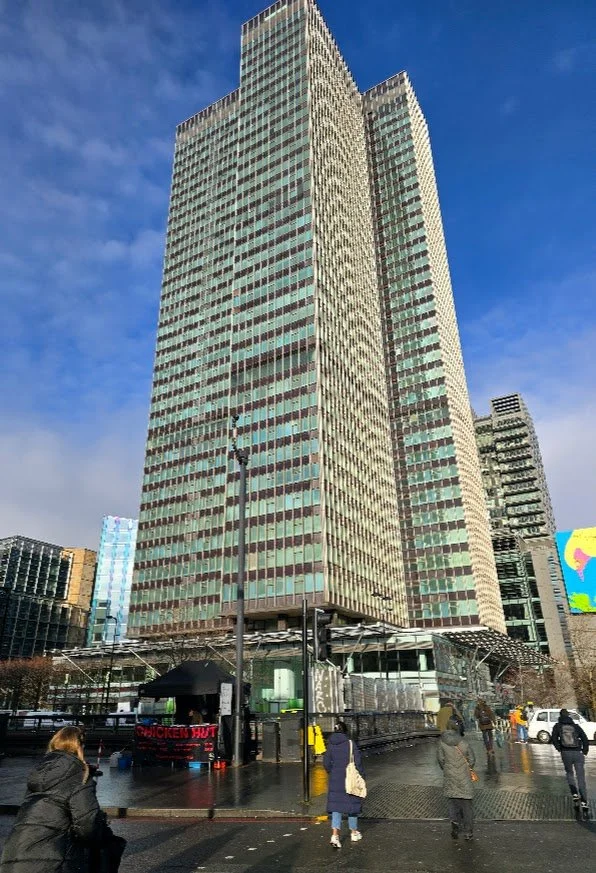
Euston Tower, London
Unlocking Urban Potential Through Temporary Activation
Cities around the world are facing a common, multifaceted challenge: how to manage the enormous pressures of development while simultaneously sustaining urban life, community cohesion, economic opportunity, and cultural diversity. In periods of rapid change — whether driven by regeneration, demographic shifts, economic transformation, or simply market inertia — vast swathes of urban land may sit under-utilised or entirely vacant. Rather than allowing these spaces to stagnate, a robust Meanwhile Use/Space strategy can unlock tremendous value for residents, businesses, developers, and local governments alike.
At its core, meanwhile use is about temporarily activating spaces that are vacant, under-used, or in transition — before, during, or even after redevelopment. This can take many forms: pop-up creative hubs, interim parks, community markets, co-working centres, affordable incubator space, arts and culture venues, or experimental public realm. It is one of the most flexible, democratic, and cost-effective tools to energise cities in flux. (savills.com)
In London, organisations such as Meanwhile Space CIC — a social enterprise working with landlords and public bodies to activate vacant buildings — have spearheaded projects from creative workspaces to community hubs, demonstrating how temporary activation can be a catalyst for long-term growth. (savills.com) Similarly, the Centre for London has documented the vast untapped potential in London’s empty spaces, noting that there are tens of thousands of commercial units sitting vacant, which could be harnessed for interim cultural, entrepreneurial, or social uses. (centreforlondon.org)
The Greater London Authority (GLA), through strategic frameworks, encourages meaningful meanwhile use as part of broader planning processes, recognising that activating space can set a positive tone for future development, engage communities, and enhance economic, cultural, and environmental benefits. (consultations.wearecamden.org)
As global cities rethink how they grow and adapt — particularly in an era of technological disruption, shifting work habits, and deepening social inequities — the value of an effective meanwhile use strategy has never been clearer.
Urban Challenges: Vacancy, Transition, and the High Cost of Doing Nothing
Cities are dynamic, but urban development often moves in fits and starts. Large redevelopment sites may sit dormant for years awaiting financing, planning approval, or market conditions. During these pauses, empty lots and buildings can become magnets for neglect — eroding safety, community confidence, and local economic activity. They represent not just lost opportunities but social and economic waste.
The Centre for London’s research underscores that London’s commercial vacancy is extensive: thousands of units empty for six months or more, and vast tracts of land approved for development but not yet realised. Meanwhile use, the report argues, offers a chance to avoid the inefficiency and stigma associated with vacancy while providing affordable space for experimentation, enterprise, and public engagement. (centreforlondon.org)
This principle holds in cities around the world. Whether it is a disused lot in New York’s Lower East Side, an empty warehouse in Milan, or idle waterfront infrastructure in Lisbon, vacant urban space diminishes urban vitality and signals neglect. Yet, with thoughtful interim programming, these spaces can become living laboratories for new ideas — bridging the gap between past context and future ambition.
Euston Tower: A Case Study in Meanwhile Use Imperatives
One of London’s most high-profile redevelopment proposals — the transformation of Euston Tower — illustrates why a strong meantime use strategy should be central to urban redevelopment.
Euston Tower, a prominent 1960s skyscraper located by Regent’s Place in London’s Knowledge Quarter, has been largely vacant for years. Recently, planning permission was granted for its redevelopment into a 31-storey science, technology, and innovation hub, with world-class workspace, public realm improvements, food and beverage offerings, and dedicated enterprise space for startups and local community ventures. (British Land)
This transformation — led by British Land with design teams including 3XN GXN, landscape designers DSDHA, and project partners — marks a significant investment in London’s innovation ecosystem and a new focal point in the city’s skyline. (BDC Magazine)
However, the redevelopment process has long lead times, enabling questions about how the site and surrounding public realm can remain vibrant in the interim. That is where a meanwhile use strategy becomes crucial.
The Euston planning brief explicitly states that meanwhile uses should be integrated into construction planning, suggesting that interim activation should help set expectations, support local businesses, and make spaces inviting even before the permanent vision is realised. (consultations.wearecamden.org) These guidelines emphasise community engagement, transparent management, mitigation of construction impacts, and social, cultural, and economic benefits — all hallmarks of an effective meanwhile use strategy.
Without timely activation, a construction site can alienate residents, reduce footfall for local businesses, and create an extended “dead zone” in a key urban area. By contrast, a vibrant meanwhile programme around Euston Tower’s redevelopment would harness the site’s connectivity and presence, fostering opportunities for temporary retail, pop-up cultural events, outdoor markets, and community-driven programming that galvanises locals and visitors alike.
Involving organisations such as Meanwhile Space CIC and design partners like Jan Kattein Architects — who have collaborated on interim activation projects in Harrow and other boroughs — could help shape creative, well-designed temporary spaces that reflect local identities and support small business incubation. (meanwhilespace.com)
Global Best Practices: How Cities Activate Vacant and Transitioning Spaces
Cities around the world provide rich inspiration for how meanwhile use can be a key urban strategy rather than a stopgap. Below are compelling examples that illustrate the diversity and potential of temporary activation.
Tokyo — Fleeting Yet Strategic Activation
Tokyo’s urban fabric is a tapestry of layered uses and continuous reinvention. In a city where retail rents are among the highest in the world, temporary pop-ups and short-term uses have provided pathways for emerging brands to test concepts in high-footfall areas without long leases. Meanwhile use here often dovetails with mixed-use development sites, encouraging innovation and helping preserve street life in neighbourhoods undergoing change.
Paris — Tactical Urbanism and Cultural Activation
Paris has embraced temporary urbanism as part of its larger planning lexicon, from seasonal parklets that expand public space for people (reflecting the city’s innovative tactical urbanism approaches) to the transformation of disused industrial sites into cultural hubs. Tactical interventions, such as designating temporary art villages in underutilised districts, have activated communities while permanent plans were developed. (Energy Cities)
New York — Pop-Ups and Innovation Districts
New York City’s Lower East Side, Brooklyn’s Domino Park precursor phases, and interim plazas in Midtown underscore how temporary activation can be woven into larger regeneration strategies. These projects often involve partnerships between local government, community organisations, and private stakeholders to animate sites with programming ranging from night markets to arts festivals — bridging economic development and cultural expression.
Bogotá — Public Space and Social Activation
Bogotá has leveraged temporary street closures and pop-up markets as part of its urban mobility and social inclusion strategy. During civic festivals or designated open street events, roads become pedestrian-centric spaces, enlivening neighbourhoods and creating shared experiences that help build civic pride and engagement.
Milan — Adaptive Reuse and Creative Prototyping
In Milan, interim uses of vacant industrial buildings and transit spaces have supported creative industries. Temporary exhibitions, design workshops, and co-working nodes have attracted cultural innovators who in turn contribute to the city’s reputation as a global design centre — reinforcing long-term regeneration goals with short-term activity.
Berlin — Urban Commons and Creative Placemaking
Berlin’s approach to vacant spaces frequently blurs the line between temporary and permanent. Community gardens, open-air markets, and creative projects have asserted community ownership of urban voids, giving rise to micro-economies and collective identity that often inform permanent redevelopment strategies.
Lisbon — Waterfront Activation and Creative Hubs
Lisbon’s riverfront has hosted interim programming — from pop-up cultural festivals to temporary food markets — transforming what might otherwise be barren transitional zones into lively public destinations. These interventions have helped solidify the waterfront’s appeal and reinforce local cultural narratives.
Istanbul — Urban Interfaces and Cultural Crossroads
In Istanbul, meanwhile interventions — whether in historic neighbourhoods or on under-utilised squares — often blend commerce, culture, and social life. Temporary spaces can act as platforms for artisanal markets, street food events, and community art projects, making urban transition periods opportunities for civic innovation.
Principles of an Effective Meanwhile Use Strategy
Across these urban examples, several key principles emerge that can inform a successful meanwhile strategy — especially around major developments like Euston Tower:
1. Community Engagement and Ownership
Temporary use should reflect local aspirations and be co-designed with community stakeholders. Projects that ignore the lived experience of residents risk becoming irrelevant or exploitative.
2. Flexibility and Iteration
Meanwhile use thrives on flexibility. Spaces should be programmed to evolve over time, allowing new activities, events, and tenants to emerge as needs and markets shift.
3. Inclusive Access
Interim spaces should be accessible to diverse users — from emerging entrepreneurs and artists to local families — not just elite groups. Affordable and inclusive access ensures broad participation and shared benefit.
4. Integration with Long-Term Vision
The best meanwhile use strategies do not exist in isolation. They should complement long-term planning — shaping expectations, building momentum, and even testing ideas that may be incorporated into the permanent vision.
5. Measurable Outcomes
Clear indicators of success — such as increased footfall, business creation, enhanced sense of place, or improvements in public perception — help justify investment and encourage replication.
Conclusion: Making Meanwhile Use an Urban Imperative
In a world where urban change is constant but often uneven, meanwhile use is a strategic imperative, not a fringe tactic. It bridges the gap between vacancy and vitality, supports equitable access to urban opportunity, and enriches the cultural, economic, and social fabric of cities.
For London and the development of Euston Tower, meanwhile use represents an opportunity to ensure that transition is not a period of stagnation but one of activation and community benefit. By embedding interim activation into planning and delivery, developers, policymakers, and communities can co-create spaces that resonate with local identity, support grassroots innovation, and elevate long-term ambitions.
Whether in Tokyo, Paris, New York, Bogotá, Milan, Berlin, Lisbon, Istanbul or London’s own Knowledge Quarter, the message is clear: Cities that embrace meanwhile use are more resilient, inclusive, and dynamic — creating a richer urban experience for all.