
Symbols of your city….
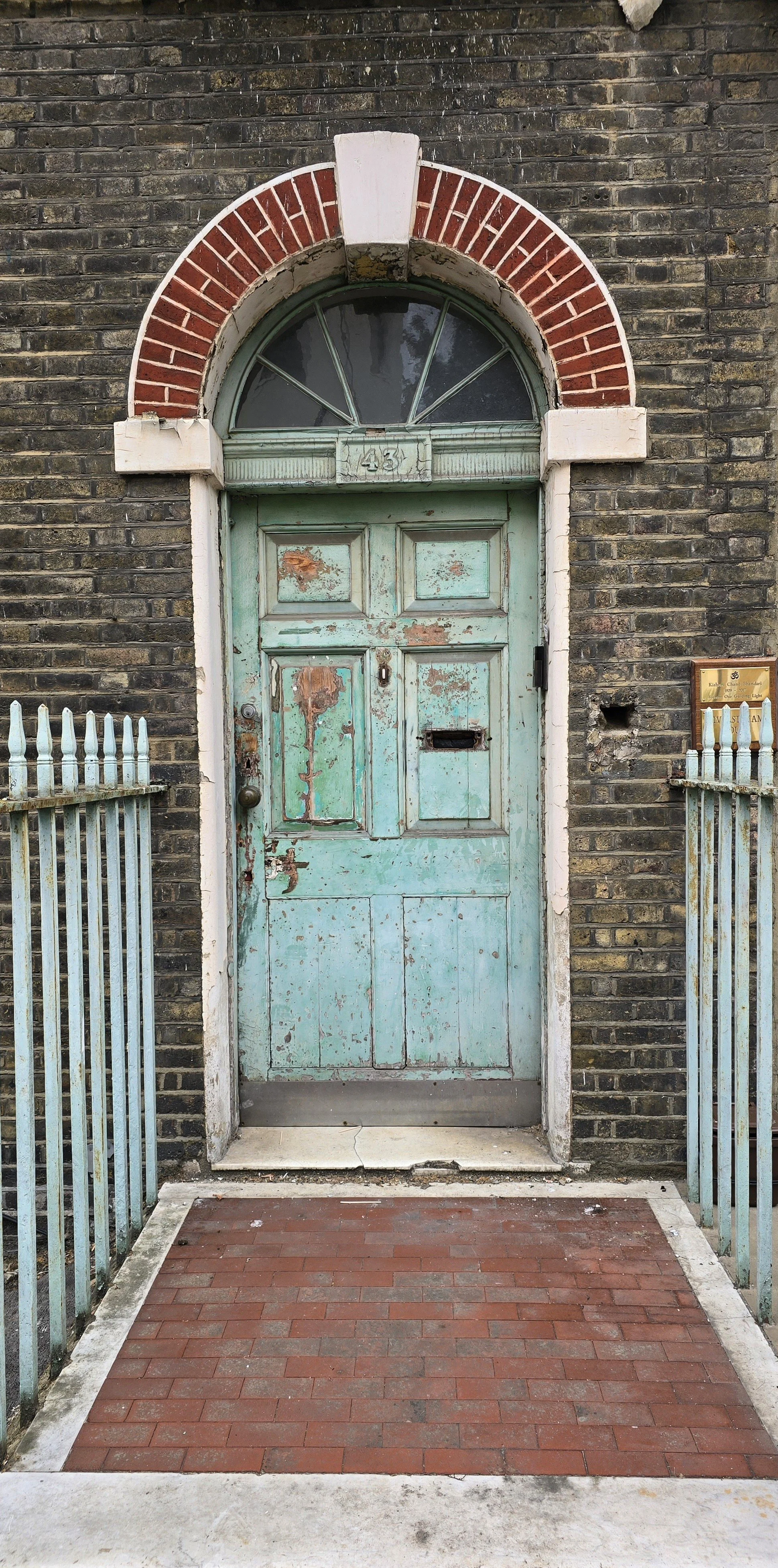
Lovely door @ Fitzrovia, London
What Is the Symbol of Your City?
Think about it. Not the postcard version — the real one.
The city you move through every day is where life happens. You work here. You love here. You argue, commute, wait, rush, get lost, find shortcuts. The city isn’t a backdrop; it’s an active force shaping who you are.
So what’s its symbol?
I’m not talking about the obvious answers. In London, we know them by heart—Buckingham Palace, Parliament, St Paul’s, Parliament, the Royal Exchange. These are architectural monuments. Global icons. Tourist checkpoints. They are perpetual, projecting power, history, fortitude, but they don’t explain how the city actually works.
They’re landmarks—but they’re not lived symbols.
London is really a city of fragments. Villages stitched together. Streets where the past leaks into the present—bomb sites in South London, post-war estates, old high roads turned into bus corridors. The city shifts block by block, mood by mood. You feel it underfoot.
To me, the real symbols of a city are smaller, messier. Sometimes ugly. Sometimes inspiring. Often forgettable in their sameness. Bus stops. Corner shops. Estate walkways. Pavement repairs. These are the places where city life repeats itself daily—and repetition is where meaning forms.
Urban theorist Kevin Lynch challenged the idea that cities are defined by monuments alone. He argued that a city’s true image lives in how people experience it—through paths, edges, districts, nodes. In other words, the symbolic city isn’t what we photograph; it’s what we remember without trying.
Cities carry emotional weight because they dominate modern life—psychologically, socially, statistically. They concentrate opportunity and inequality in the same square mile. They give us access and obstacle, promise and pressure.
Jane Jacobs understood this when she wrote that cities only work “when, and only when, they are created by everybody.” Agency matters. Participation matters. Audre Lorde pushed this further, reminding us that “there is no such thing as a single-issue struggle,” because city life is layered—housing, education, safety, health, identity all collide in the same streets.
David Harvey called this the “right to the city”—not just the right to access it, but the right to shape it. To change ourselves by changing our urban environment.
These ideas—agency, equity, participation—are emotional drivers. They’re why cities matter to us. Why we fight through them. Why we stay.
A real city dweller doesn’t just consume the city. They contribute to it.
And maybe that’s the real symbol of a city—not its skyline, but its people in motion, claiming space, leaving marks, and refusing to be invisible.