


❋
African Street Style London
Music · Fashion · Art · Public Space
African Street Style began with a simple idea: to use the streets and public spaces of East London as a platform for contemporary African and diaspora creativity.
Established in Shoreditch, the project brought together music, fashion, photography, visual art, film, dance, debate and performance, placing this work within the everyday life of the city rather than separating it from it.
Centred around the Boundary Estate, Calvert Avenue, Boundary Circus and Shoreditch Church, African Street Style developed through a series of street-based programmes that invited artists, musicians, designers, performers, residents and audiences to occupy and reinterpret familiar urban spaces.
At its heart was an interest not simply in presenting African culture, but in exploring its influence on contemporary London — its music, fashion, visual language, street culture and increasingly international identity
The street was fundamental to the project.
African Street Style was conceived as an open cultural platform: performances could take place alongside shops, fashion could be presented outside conventional venues, sound systems could animate public space, and people encountering the programme by chance could participate alongside those who had travelled specifically to attend.
This created a very different relationship between artist, audience and place.
The streets surrounding the Boundary Estate became stages, galleries, meeting places and spaces for conversation. Music, movement, fashion and visual culture existed alongside the ordinary rhythms of the neighbourhood.
That informality was intentional. African Street Style was interested in what happens when cultural activity becomes part of the city rather than something contained within a building
Across successive editions, the programme brought together an eclectic group of established and emerging artists and practitioners including Hassan Hajjaj, Lakwena Maciver, Shabaka Hutchings, Yussef Dayes, Fabiana Cozza, Family Atlantica, Jazz Grant, Samson Soboye, Melt Yourself Down, Simo Lagnawi, Aba Shanti and Irineu Nogueira, alongside traditional music, dance, movement and capoeira.
The result was deliberately multidisciplinary. A visitor might encounter a fashion presentation, a photographic intervention, Brazilian and African movement, live music or a sound system within the same programme.
African creativity and contemporary London
African Street Style was also concerned with a wider question: how does African creativity move into, influence and reshape mainstream culture?
This question informed Accessing the Mainstream, a strand of discussion and programming examining the influence of African creativity within fashion and the wider cultural industries.
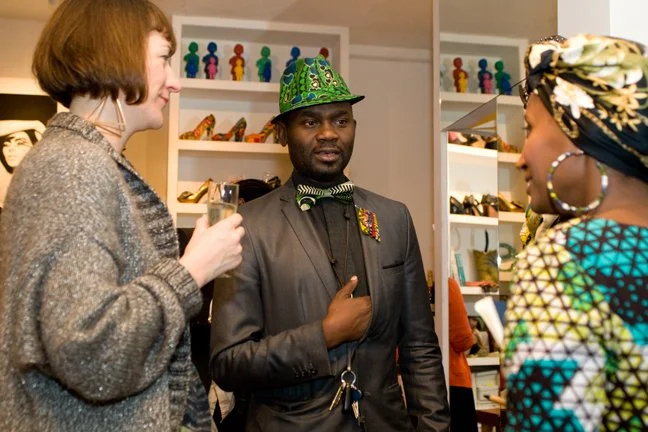
An evening at SOBOYE on Calvert Avenue brought together fashion editor and writer Helen Jennings, designer Samson Soboye, writer and curator Hannah Azieb Pool and creative practitioner Ola Shobowale to discuss African textile traditions, design and their increasing influence on mainstream fashion.
Rather than separating discussion from creative practice, these conversations formed part of the same programme. African Street Style could therefore move between celebration and enquiry: presenting culture while also asking questions about authorship, representation, identity and who benefits when ideas move from the margins into the mainstream.
A meeting of local and international culture
Although rooted very specifically in Shoreditch, African Street Style was international in outlook.
The programme connected London with creative influences and practitioners drawing upon traditions from across Africa, the Caribbean, Brazil and the wider diaspora. Moroccan visual culture could sit alongside Brazilian movement; African textile traditions alongside contemporary London fashion; live African music alongside London's sound-system culture.
This relationship between the local and international became an important part of the project's identity. London provided the meeting place; the Boundary Estate and surrounding streets provided the setting.
The programme demonstrated how a neighbourhood could become a place in which different cultural histories, contemporary identities and creative practices could seamlessly encounter one another whilst retaining the original functionality of the street
Making space
African Street Style also grew from my parallel interest in cities, regeneration and the built environment.
My professional work has consistently involved thinking about how people experience streets, housing estates, town centres and public spaces. African Street Style approached many of the same questions through culture.
What makes people stop rather than simply pass through?
Who feels entitled to occupy public space?
What happens when a familiar street is temporarily used in an unfamiliar way?
And how can cultural activity create a different relationship between people and place?
In this sense, African Street Style became more than an events programme. It became an experiment in cultural placemaking and temporary urban activation — using creativity to change, even briefly, how a piece of the city was experienced.
The project subsequently featured in architect Jan Kattein's Londoners Making London: Transforming Neighbourhoods, which examines community-led projects that have transformed neighbourhoods across the capital. African Street Style appears within the book's exploration of temporality and activation, reflecting on the role that individuals and communities can play in making things happen within the gaps between formal planning, governance and everyday city life.
That recognition is particularly important to the story of the project because it identifies something that had always been instinctive to African Street Style: culture can be a way of making place.
From African Street Style to a wider practice
The ideas explored through African Street Style have continued to develop.
Questions around diaspora, identity and political history informed Progress (1968) and Progress 2020. An interest in music, migration, technology and the cultural geography of London developed through Sound System City.
The relationship between creative activity and public space has also remained central to my work in regeneration.
African Street Style therefore represents an important point of connection within StreetLife.
It brought together interests that continue to shape my practice: culture and cities; local identity and international exchange; music and politics; creativity and public space; and the ability of people to change the meaning of a place simply by using it differently.